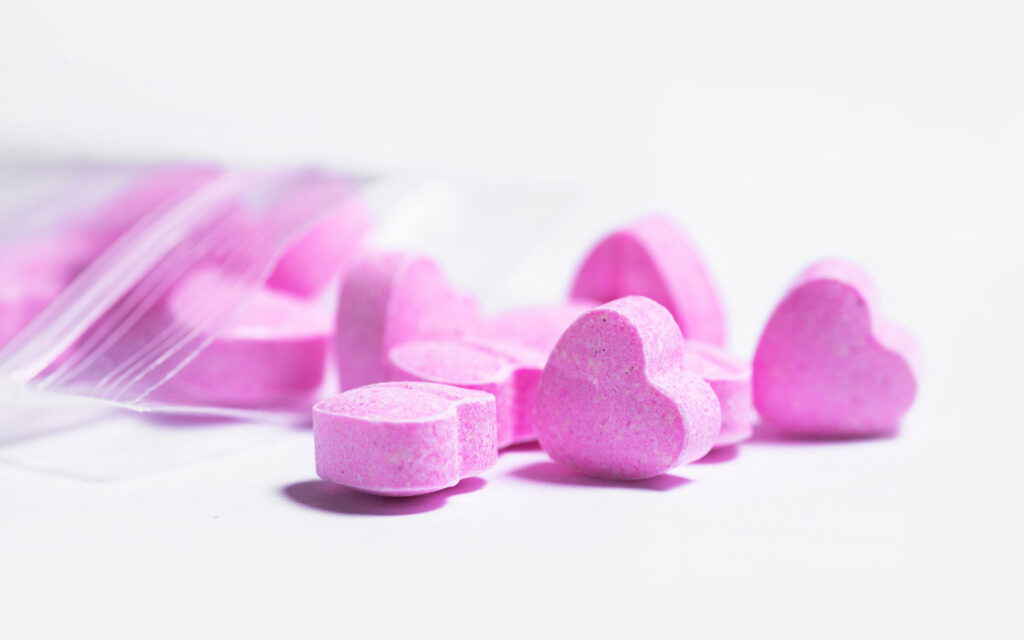

Drugs in Halloween Candy: Separating Myths From Real Risks



Key Points
- Despite a common urban legend, researchers have not documented a child being killed or seriously harmed by a contaminated treat received from a stranger while trick-or-treating.
- The best-known fatal poisoned candy case involved a parent, not an unknown person distributing treats.
- Colorful illicit fentanyl is a real danger, but available evidence does not establish a connection to Halloween candy.
- Families can protect children by inspecting treats, supervising younger children, and prioritizing pedestrian safety.
Halloween is supposed to be a fun, spooky time with costumes, candy, and harmless mischief. Yet, every year since the 70s without fail, there has been a frightening rumor spread through word-of-mouth, advice columns, chain emails, or social media posts about Halloween candy in drugs that can make an ordinary family tradition feel unsafe.
When warnings mention hazards like fentanyl, poison, or razor blades threatening our children, it can be difficult to know which concerns are documented and which are just urban legend.
Some warnings are based on real incidents, while others have been exaggerated or spread without evidence. Knowing what has actually been documented can help you protect your children without letting frightening rumors take over Halloween night.
What Are Halloween Candy Drugs?
This refers to a persistent urban legend and seasonal health scare warning that strangers have intentionally passed out illicit narcotics such as ecstasy, THC edibles, or rainbow fentanyl, disguised as commercial candy to young trick-or-treaters.
Decades of law enforcement data and sociological research show that these claims are almost entirely false; there are virtually no verified cases of strangers targeting children with illicit drugs through trick-or-treat loot bags. [1]
Most headlines arise from misunderstanding illicit drug packaging, such as colorful pills or parodied THC edibles intended for adult buyers, or from isolated accidental ingestions of a family member’s household stash, rather than malicious neighbors giving away costly drugs for free.
What the Halloween Candy Drugs Fear Gets Wrong
It is natural to fear for our children, especially on a holiday that, despite the costumes and candy, is also associated with horror movies, fear, and the macabre.
It is also, paradoxically, associated with taking candy from strangers, which is something most parents warn children against the other 364 days of the year.
It is only natural that we fear strangers will hide poison, illicit drugs, or sharp objects in treats handed to children. But Joel Best, a sociologist and criminal justice professor who has studied contaminated treats since the 1980s, classifies the story as a contemporary legend. His review found no documented report of a child being killed or seriously injured by a contaminated treat picked up while trick-or-treating.[2]
That does not mean parents should ignore torn packaging, damaged or expired candy, unfamiliar substances, or reported candy tampering. It does mean, however, that broad claims about people routinely placing drugs or razor blades in Halloween candy are not supported by the historical record.
The drugs in Halloween candy myth can also distract families from more immediate concerns. These include traffic, choking hazards, and accidental access to cannabis edibles or medications stored at home. Halloween safety works best when it responds to evidence rather than viral posts.
Why the Urban Legend Shows Up Every Year
An urban legend often survives because it reflects a familiar fear, even when the claimed pattern cannot be verified. Halloween combines children, strangers, and food, making stories about poison or razor blades emotionally powerful. News coverage and social media can give one unconfirmed account the appearance of many cases.
Reports involving needles, pins, or razor blades should never be treated as jokes. Yet the existence of an individual report does not demonstrate an organized threat to trick-or-treaters. Families can preserve perspective while still discarding anything that appears opened or altered.
The legend has also changed with public concerns. Earlier versions focused on poison and razor blades. More recent versions have focused on brightly colored fentanyl, connecting a genuine addiction and overdose crisis to a long-standing Halloween fear.
Verified Poisoned Candy Cases and What They Tell Us
The most widely cited fatal case occurred in 1974. Ronald Clark O’Bryan poisoned his 8-year-old son’s Pixy Stix in an effort to collect life insurance, meaning the person responsible was the child’s father rather than a stranger handing out Halloween candy.[3]
Researchers have reviewed about 200 reported candy tampering cases in the United States and Canada dating to 1958. Follow-up investigation found that the vast majority were hoaxes rather than verified attempts by strangers to poison children.[3]
This distinction matters. The one documented case was a family homicide staged to fit into the urban legend (already well-known even then). It does not establish that unknown people commonly distribute poisoned candy on Halloween night.
Rainbow Fentanyl and Candy Tampering Claims
In 2022, the Drug Enforcement Administration warned about brightly colored illicit fentanyl found in pills, powder, and blocks resembling sidewalk chalk.[5] Illicit fentanyl is dangerous, and counterfeit pills or powders should never be handled casually or consumed.
However, the warning did not establish that people were putting fentanyl into Halloween candy. The DEA administrator said the agency had not seen a connection to Halloween, and no report of candy mixed with fentanyl had emerged two days after Halloween that year.[6]
A toxicologist and addiction medicine specialist also challenged the idea that traffickers would give drugs to children as free candy, noting that children are not financially independent customers.[6] This does not minimize fentanyl’s risks; however, it just separates a serious opioid and addiction concern from an unsupported Halloween night scenario.
Color alone cannot establish what a pill or substance contains. Children should be taught never to taste loose powders, unknown pills, or items that only resemble candy. Adults who encounter an unknown substance can avoid touching it and seek guidance from local emergency or law enforcement professionals.
How to Check Kids’ Halloween Candy at Home
Set a simple expectation before trick-or-treating: treats wait until a trusted adult checks them. This rule can be explained calmly, without telling children that every neighbor or unfamiliar person intends harm.
The Food and Drug Administration recommends accepting commercially wrapped treats and inspecting them at home before they are eaten. Adults should look for tears, pinholes, discoloration, or an unusual appearance, discard suspicious items, and remove gum, peanuts, hard candies, and small toys that could pose choking hazards for very young children.[7]
During the check:
- Discard open, partly unwrapped, or leaking items.
- Look for packaging that appears resealed, punctured, or unusually discolored.
- Keep anything containing a loose pill, powder, razor blades, or sharp objects away from children.
- Review allergy labels and age-related choking risks.
- Remove homemade treats unless they came from someone the family knows and trusts.
Not every damaged wrapper indicates intentional candy tampering. Treats can be crushed in a bag or opened accidentally. Discarding questionable items is a precaution, not proof that someone tried to poison a child.
Halloween Safety While Trick or Treating
Traffic is a more clearly documented Halloween night danger than stranger-distributed poison. A 42-year analysis found that pedestrian fatality risk was 43% higher on Halloween than on comparison evenings, with children ages 4 through 8 facing the greatest increase in risk.[8]
Communities can promote safer trick-or-treating by improving visibility, reducing vehicle traffic, and encouraging slower driving in residential areas. Law enforcement and community leaders recommend supervising younger children, discussing safe street crossing, creating car-free areas, and avoiding driving after alcohol, cannabis, or other drug use.[9]
Families can also:
- Choose costumes that allow children to see clearly and walk without tripping.
- Use lights or reflective materials, so trick-or-treaters are easier for drivers to see.
- Cross at designated locations rather than between parked cars.
- Keep younger children with a responsible adult.
- Agree on a route and return time for older children.
- Ask everyone to wait until the treats have been inspected.
These precautions address likely risks without framing neighbors as threats. They also give children rules they can remember when Halloween night becomes busy and exciting.
Support When Addiction Is the Deeper Concern
Sometimes a Halloween warning brings an existing family concern into focus. A loved one may be using fentanyl, taking unknown pills, or struggling to control substance use. Addiction is the most severe form of a substance use disorder, and it can involve compulsive use despite harmful consequences.
We understand that asking for help can feel difficult, but support is available, and it is only a phone call away. Reach out to Paramount Wellness today. Our admissions team is standing by to answer your questions, walk you through options, and help you stay safe and healthy, not just on Halloween night but all year-round.
Frequently Asked Questions About Halloween Candy in Drugs