

How Long Does Xanax Stay in Your System? Half-Life, Drug Test Detection, and Elimination Timeline



Key Points
- Xanax works quickly, usually within 15 to 30 minutes, but continues to stay in your body long after its calming effects wear off.
- The typical half-life of Xanax is approximately 11 hours, though this can vary significantly person to person.
- Detection times for different types of tests will vary, ranging from a few days in urine tests to months in hair tests.
- Xanax’s half-life plays an important part in determining appropriate dosing and why quitting Xanax cold turkey is very risky.
- If you have trouble discontinuing Xanax or if you are taking it at higher doses than recommended, you should seek assistance from a mental health professional.
If you are taking Xanax, you know that it starts working quickly, usually within 15 to 30 minutes, and its calming effects can last anywhere from 4 to 12 hours if you’re taking an extended-release dose. But just because its calming effects wear off does not mean that the medication has completely left your body.
Whether you are currently taking Xanax, worried about an upcoming drug test, or discussing a possible Xanax prescription with your doctor, knowing how long the substance stays in your body is good information to have. This article will walk you through how long Xanax stays in your system, what can affect that timeframe, and what you can expect from different types of screenings.
How Long Does Xanax Stay in Your System?
For most healthy adults, a single dose of Xanax (the brand name for alprazolam) will be largely cleared from the body within a few days, though traces of it can sometimes still be detected depending on the type of drug test used.
Complete clearance of a benzodiazepine like alprazolam requires multiple half-lives rather than just one. Considering alprazolam has an average half-life of around 11 hours, it would take approximately 48 to 96 hours of steady elimination (2 to 4 days) for your body to clear the majority of the substance.[1] It is helpful to understand that this is a gradual process, not a fixed timeline, and it can vary widely in people whose metabolism is slower, those prescribed higher or more frequent doses, and by several other factors.
What Is the Half-Life of Xanax?
Half-life is the amount of time it takes to remove 50% of the administered dose from the body.
The average half-life for alprazolam in normal adults is approximately 11 hours; however, there is considerable variation between patients, ranging from about 6 to 27 hours depending on the person.[2]
Factors contributing to these variations include differences in patient metabolism and liver function, as well as patient age and body fat percentage, since alprazolam is partly stored in fatty tissue.[3] Since half of the substance is removed in a single half-life, it usually takes around four or five half-lives, roughly two to three days for most people, for alprazolam to be mostly eliminated from the body.[4]
Why Does Xanax’s Half-Life Matter?
Because of its relatively short half-life compared to some other benzodiazepines, symptoms associated with anxiety or panic may return before the next scheduled dose. This may explain why extended-release formulas of alprazolam are available for continuous symptom management.
Healthcare providers carefully consider the half-life when prescribing alprazolam and medications like it, since half-life affects dosing intervals and the risk of both under-treatment and overuse. This is also why abruptly discontinuing alprazolam after long-term use can lead to severe withdrawal symptoms, even if the medication was only ever taken as prescribed. The body adjusts to the medication over time, and suddenly removing it can trigger withdrawal symptoms that can include seizures, along with other potentially life-threatening complications, which is why tapering alprazolam under close physician supervision is crucial.[5]
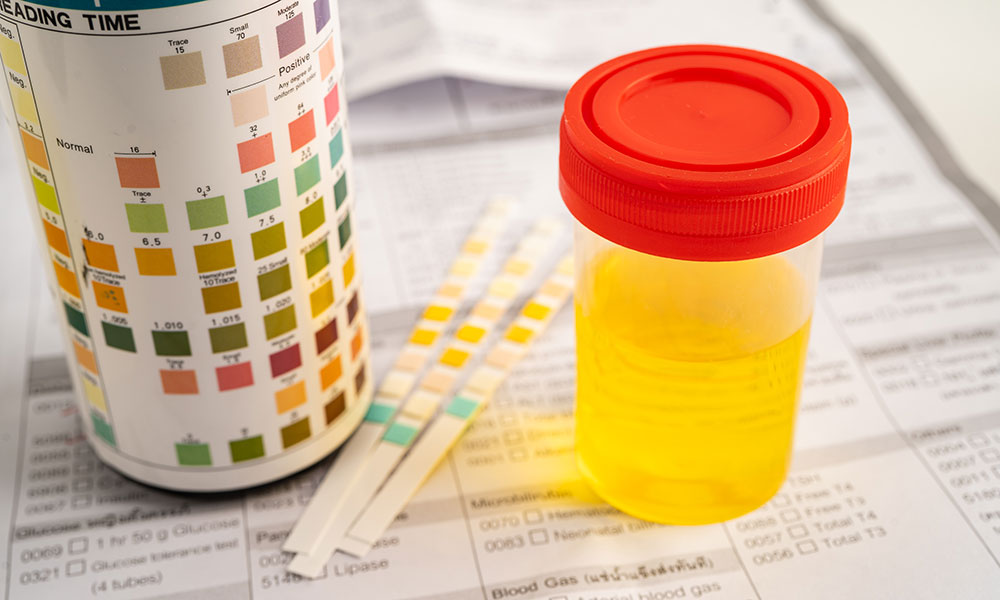
How Long Does Xanax Stay Detectable on Drug Tests?
| Drug Test | Typical Detection Window |
| Urine | 2 to 6 days (longer with regular or high-dose use) |
| Blood | 1 to 2 days |
| Saliva | Up to 2.5 days |
| Hair | Up to 90 days |
Please note that these are approximate values. The actual timeframe of detection varies significantly due to multiple factors, including dosage, usage frequency, metabolism, and overall health.
How Long Will Xanax Stay in Urine?
Urine testing is the most popular form of drug testing found in work environments, clinics, and courts primarily because it is inexpensive and easy to implement.
With occasional or single-dose use, alprazolam and its metabolites tend to be detectable in urine for approximately 2 to 4 days.[6] Those who have been using alprazolam regularly or at higher dosages create an accumulation of metabolites in their bodies, which increases extended detection periods to 7 or more days. This is another reason urine testing continues to be the primary method of detecting use during workplace screenings, monitoring prescriptions, and documenting drug use history in court cases.
How Long is Xanax Detected in Blood, Saliva, and Hair?
Blood Tests
Blood tests usually measure levels of alprazolam in the bloodstream for about 1 to 2 days.[7] Since alprazolam clears quickly from the bloodstream, blood tests provide information related to recent or current use. Blood tests are also more invasive and typically only used in situations where immediate or very recent use data is necessary, such as in emergency or surgical situations.
Saliva Tests
Saliva testing can detect alprazolam for up to 2.5 days after last use.[8] It provides a rapid and non-invasive means of verifying recent use. However, saliva testing provides less information about historical patterns of use than urine or hair follicle testing.
Hair Follicle Tests
Hair testing measures levels of Xanax for the longest period of time, up to 90 days, since metabolites are embedded in hair as it grows.[9] But while it can identify long-term patterns of use, it cannot establish specific dates within the timeframe.
What Factors Affect How Long Xanax Stays in Your Body?
- Age: Older patients tend to metabolize drugs more slowly, resulting in prolonged detection.
- Liver Function: The liver is primarily responsible for metabolizing alprazolam, so liver health plays a big role in determining how quickly the drug is metabolized and excreted.
- Metabolism: People who have fast metabolisms generally process Xanax more quickly than those with slow metabolisms.
- Dosage: Higher doses of Xanax take longer to completely clear from the body than smaller doses.
- Frequency of Use: Regular or chronic use results in prolonged detection due to the accumulation of metabolites over time, compared to one-time or low-dose intermittent use.
- Other Medications: Certain medications, including some antidepressants, may affect the rate at which Xanax is metabolized, potentially extending or reducing the duration of detectability.
- Overall Health: Overall physical condition, including kidney and liver status, fluid intake, and body composition, all affect the efficiency with which the body processes and eliminates Xanax.
Can You Speed Up How Quickly Xanax Leaves Your System?
There’s no proven way to speed up how quickly Xanax leaves your body. Drinking more water, exercising, taking detox products, sitting in a sauna, or similar “flushing” methods are commonly suggested, but none of them will accelerate the rate at which the body metabolizes and eliminates alprazolam, and some can actually cause additional health concerns.
Your metabolism and liver function will process alprazolam at their own natural pace.
When Xanax Use May Require Professional Help
A sign that you need professional assistance with alprazolam use is if you have taken higher doses than directed by your doctor, developed a tolerance for the medication so that it no longer has its intended effect, or cannot stop taking the medication.
Also a red flag: experiencing withdrawal symptoms after reducing your dose or quitting altogether.
Misusing Xanax with other substances, such as alcohol or opioid medications, is a serious risk that should not be ignored.[10] For those whose alprazolam use crosses over into something else, there are many treatment options available and usually include a medical detoxification process, since tapering off these medications can lead to potentially dangerous withdrawal symptoms. Therapy, including cognitive behavioral therapy (CBT), can provide additional support to patients throughout their treatment program.
Concerned About Xanax Dependence? Help Is Available.
Understanding how Xanax works in the body is an important initial step in treating a Xanax addiction problem.
Whether you are using Xanax according to your prescription or are experiencing trouble stopping, there is help available. Our knowledgeable staff at Paramount Wellness can help you find the safest, evidence-supported ways to treat benzodiazepine dependency and begin your journey toward recovery.
Reach out today. Our admissions team is ready to answer your questions and guide you toward the next right step for you.
Frequently Asked Questions About How Long Xanax Stays in Your System
Related Programs & Therapies
Learn More About Dual Diagnosis Treatment at Paramount Wellness
- Dual Diagnosis
- Depression
- Bi-polar Disorder
- Obsessive Compulusive Disorder
- Post Traumatic Stress Disorder
- ADHD
- Eating Disorder