

How Long Does Codeine Stay in Your Body? Detection Times, Tests, and Factors



Key Points
- Codeine is typically found in urine for up to three days, in blood for 24 hours, and in hair for up to 90 days.
- A liver enzyme called CYP2D6 converts codeine into morphine, and differences in this enzyme determine how quickly your body clears the drug.
- Using codeine frequently or in high doses causes metabolites to build up, which extends the window of time it can be detected by a test.
- Taking antidepressants like selective serotonin reuptake inhibitors (SSRIs) or serotonin-norepinephrine reuptake inhibitors (SNRIs) can change how fast your liver processes codeine.
- Because codeine is an opioid with a risk for dependence, stopping use should be done under medical supervision to safely manage withdrawal symptoms.
Codeine is a prescription opioid available in oral tablets, capsules, liquid solutions, or syrups, commonly used to manage mild to moderate pain and suppress coughing. While it can be helpful when used as prescribed, codeine also carries risks for misuse, dependence, and overdose. Many people searching for answers are trying to understand safety concerns, upcoming drug tests, or whether ongoing use may signal a deeper issue that deserves care and attention.
Detection time can affect medical decision-making, workplace drug screening, legal situations, and treatment planning. For individuals managing both substance use and mental health concerns, known as dual diagnosis, accurate information can reduce fear and support informed choices.
What Is Codeine and How Does the Body Process It?
Codeine is an opioid analgesic that works both within the central nervous system (the brain and spinal cord) and throughout the body to reduce the perception of pain and suppress cough reflexes. It is classified as a Schedule II or Schedule III controlled substance depending on formulation:
- Schedule II: High potential for abuse, which may lead to severe psychological or physical dependence.
- Schedule III: Moderate to low potential for physical dependence and high potential for psychological dependence.
Once ingested, codeine is absorbed through the digestive tract and processed by the liver. A key enzyme, CYP2D6, converts part of the drug into morphine, which is responsible for much of its pain-relieving effect. Genetic differences in this specific enzyme [2] explain why some people feel more substantial effects while others notice very little relief.
Codeine has a half-life of approximately 2.5 to 4 hours. Although the active drug clears relatively quickly, its metabolites remain longer, which is why detection time exceeds the period of notice able effects [3].
Symptom Relief vs. Detection Time
It is important to understand that the time codeine provides active symptom relief is much shorter than the time it remains detectable in your body.
For most people, a single dose of codeine offers pain relief or cough suppression for approximately 4 to 6 hours. However, even after these noticeable effects wear off, the medication and its metabolites continue to circulate in your system. This is why you may no longer feel the drug’s benefits, yet it can still be detected in your blood, urine, or hair for days or even weeks afterward.
Codeine Detection Windows by Test Type
Urine Tests
Urine testing is the most frequently used test type for codeine use. A person who uses codeine on occasion will have positive results for codeine in their urine for approximately one to three days. However, the person who routinely uses or abuses codeine may have positive urine results for approximately four to five days.
Urine tests primarily measure morphine and other codeine metabolites as opposed to actual codeine concentrations in a person’s urine.
Blood Tests
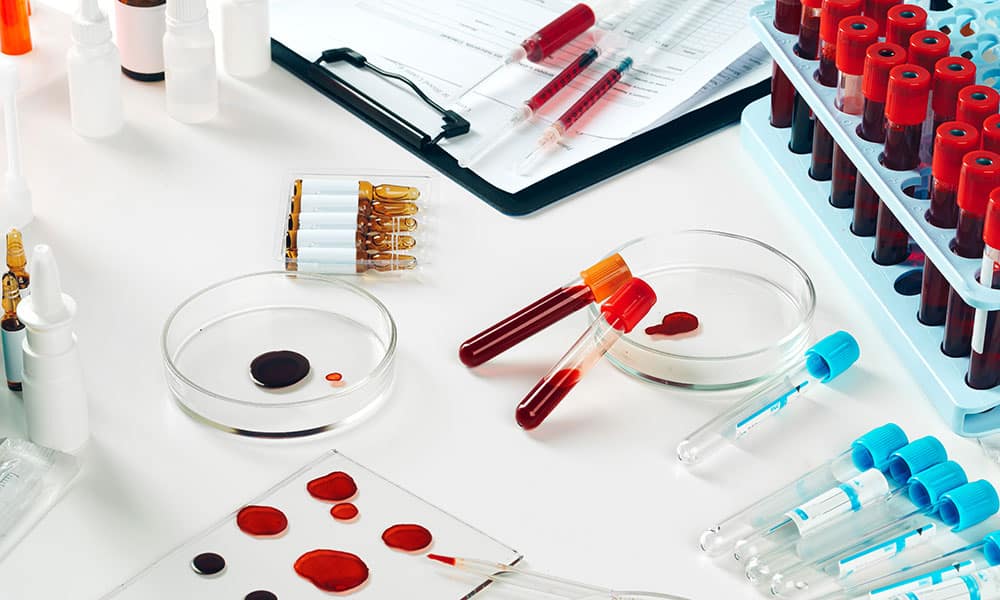
Blood tests are positive for about 24 hours after the last dose of codeine. Blood tests provide a good indication of a person’s most recent use of codeine. It is usually only done in a clinical setting or during an emergency. Because codeine clears from the bloodstream relatively quickly, blood testing is not a reliable method for determining whether someone has a history of using codeine [1].
Saliva Tests
Oral fluid testing (otherwise known as saliva testing) will detect codeine for 24 to 48 hours after the last use. It depends on metabolism, dose, and test sensitivity. Saliva testing is typically used at workplace testing sites and at roadside locations.
Hair Follicle Tests
Hair testing has a detection window of up to 90 days. While this testing type is ideal for determining long-term users of codeine, hair tests do not determine current impairment or the exact timing of use. There are some specific legal reasons [6] for which hair testing for codeine is done.
What Factors Affect How Long Codeine Stays in the Body?
Several factors influence how long codeine stays in the body.
Biological Factors
Each individual’s body has a personal metabolic rate, which influences how long codeine remains in their body. Variations in the CYP2D6 liver enzyme strongly influence how efficiently codeine is processed and eliminated from the body [2]. Age, liver health, and kidney health also affect elimination. Body mass and hydration status also affect urine concentration and detection time.
Dosage and Frequency of Use
Delays in urine elimination occur due to repeated and high-dose codeine use. The accumulation of metabolites from chronic use will extend the time frame during which the drug can be detected. Frequent opioid exposure via chronic administration [3] prolongs both detection time and dependence risks, according to American Addiction Centers.
Drug Formulations and Interactions
Drug formulations that contain both codeine and acetaminophen or other ingredients may alter the metabolism of codeine. Additionally, certain antidepressants (either a selective serotonin reuptake inhibitor, SSRI, or a serotonin-norepinephrine reuptake inhibitor, SNRI) can also inhibit or increase liver enzyme function and therefore alter the rate of codeine metabolism [2].
Codeine Testing in Practice: Healthcare and Legal Relevance
Healthcare Settings
Medical settings perform codeine testing for several reasons, including assessing adherence to medication, identifying possible drug interactions, and ensuring the safety of pain management. Addiction treatment centers often employ codeine testing to allow clinicians to develop and modify patient treatment plans, identify relapse, and to address patients’ needs.
Medical detoxification is a process in which healthcare professionals help patients manage withdrawal symptoms using medication and monitoring, often including toxicology screening [5] as part of comprehensive care.
Workplace and Legal Settings
Codeine testing is often performed during pre-employment screenings, random workplace testing, and forensic investigations. There are potentially serious consequences of obtaining positive results from a codeine test. Therefore, the result must be interpreted as accurately as possible. False-positive results and cross-reactivity remain limitations. A positive screening test is usually subject to further, more specific, testing for confirmation [4].
Interpretation Considerations
It is important to note that laboratories use confirmatory testing methods, such as gas chromatography mass spectrometry, to increase the accuracy of results. Disclosing a prescription for codeine [5] before testing can avoid misinterpretation of results.
How to Ensure Accurate and Reliable Codeine Testing
Sample Collection Best Practices
Chain-of-custody requirements in legal settings [6] should be strictly followed during sample collection to maintain the integrity of the testing sample and ensure accurate results.
Laboratory Methods and Confirmation
Screening tests performed in laboratories are intended to be sensitive, detecting as many true positives as possible. In contrast, confirmatory tests are designed to be specific to detect false positives. Using a two-step, or tiered approach [4] in codeine testing increases the accuracy of results and provides the fairest outcome for the individual being tested.
Avoiding Common Errors
There are many ways to produce inconclusive results, including overhydration, which dilutes urine. Testing methods now can detect if there has been deliberate overhydration, possibly in an attempt to deliberately skew results. Excessive water consumption in an attempt to test negative is not effective and can be dangerous. A sample containing poppy seeds [1] may yield a low-level opioid positive. However, through confirmation testing, it will be possible to determine whether the positive result was due to dietary exposure or to codeine use.
Compassionate Support for Codeine Use and Recovery
If your question regarding codeine detection is related to concerns about dependence on codeine, withdrawal symptoms, or mental health, please know that you are not alone. At Paramount Wellness, in Haddam, Connecticut, we are aware of the complex nature of opioid use, especially if co-occurring with anxiety, depression, trauma, or other mental health disorders.
Boutique residential treatment offers a supportive, private environment where individuals can receive inpatient detox, therapy, and dual diagnosis care together. Treatment focuses on safety, dignity, and evidence-based approaches (the practical application of the findings of the best available current research) that support long-term recovery.
Frequently Asked Questions About Codeine’s Duration
Related Programs & Therapies
Learn More About Dual Diagnosis Treatment at Paramount Wellness
- Dual Diagnosis
- Depression
- Bi-polar Disorder
- Obsessive Compulusive Disorder
- Post Traumatic Stress Disorder
- ADHD
- Eating Disorder
We’re Glad You’re Here! Take The First Step In Recovery Today.
We’re eager to meet you and help you succeed in your recovery journey. Contact us today to start now.
