

Percocet Detection Times: How Long Does It Stay in Your System?



Key Points
- The time period over which Percocet relieves pain is much less than the amount of time the drug remains in the body.
- Percocet contains oxycodone and acetaminophen, but drug tests primarily look for oxycodone and its metabolites.
- Oxycodone has a half-life of about 3–4 hours and is mostly eliminated after roughly 15–20 hours, although its metabolites can remain detectable much longer.
- Percocet can typically be detected for about 2–4 days in urine, up to 24 hours in blood, 1–2 days in saliva, and up to 90 days in hair.
- Detection time can vary based on dose, frequency of use, liver and kidney function, age, genetics, other medications, and overall health.
- Drinking extra water, exercising, taking vitamins, or using detox products has not been shown to significantly speed the removal of oxycodone from the body.
If you are currently taking Percocet for severe pain and need to take a drug screen, or are just curious about how the drug works on your system, knowing what to expect may reduce anxiety and provide additional information to make informed decisions about your safety.
This article will walk you through how Percocet affects your body, how long it can be detected by a variety of common drug tests, and what factors might affect detection windows.
How Long Does Percocet Stay in Your System?
Percocet consists of two types of substances: oxycodone, an opioid painkiller, and acetaminophen, a non-opioid pain and fever reducer.[1] The majority of drug tests are looking to test for the presence of oxycodone and its metabolites, because they are the parts of this combination product which can lead to addiction and abuse.[2]
Oxycodone generally has a half-life of anywhere from 3–4 hours. This means that it will take approximately 3–4 hours for half of what was taken to be broken down and eliminated from the body. In order for oxycodone to be removed from the body, there needs to be approximately 5 half-lives, or around 15–20 hours.[3] There is often confusion about how quickly the body removes medications. While the person taking a medication may stop experiencing the effects of it within just a few hours, that does not necessarily mean that the body has completely removed all traces of it.
This is especially true when comparing the sensitivity of laboratory testing versus the body’s ability to determine if a particular medication is still effective. Laboratory testing can measure the presence of both oxycodone itself, as well as metabolites produced by the liver through breaking down oxycodone. These metabolites can be detected in urine, blood, saliva, or hair for extended periods of time after a person stops experiencing any effects from the medication.
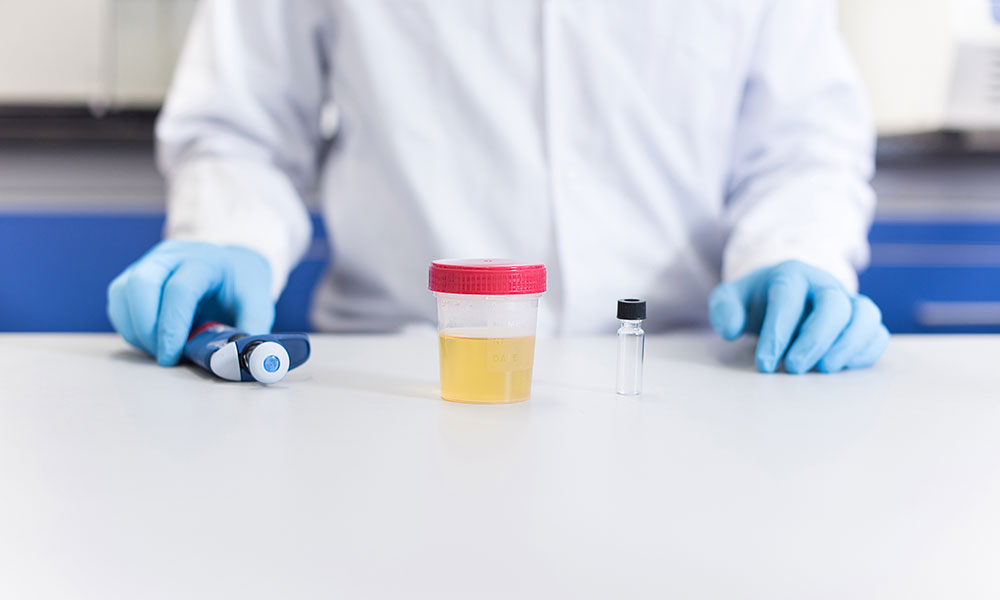
How Long Can Percocet Be Detected in Urine?
Testing your urine is generally the least invasive method to find out if you have been using Percocet, which is why it’s so widely used. Testing urine is relatively inexpensive, and it gives a fairly long detection period when compared to other types of drug tests, such as blood or saliva. On average, Percocet stays in a person’s urine for about 48–96 hours; however, that can depend on many different health-related things.[4]
If someone is taking Percocet continuously or repeatedly, there is a greater chance that the metabolites of Percocet will accumulate and then slowly leak back into the bloodstream over a much longer period. That is part of the reason that a person who uses Percocet continuously for several months might test positive for a lot longer than a person who only took it one time.
Another thing that is often misunderstood regarding urine testing is that drinking water will not effectively eliminate evidence of Percocet use from your urine.[5] However, while being hydrated may thin out the sample, all laboratories have some sort of marker to determine whether or not you have diluted your sample; if the sample is too diluted, it will likely be marked as invalid, and you’ll have to provide another sample and test again.
Detection Times for Various Types of Drug Tests
| Test Type | Typical Detection Window |
| Urine | Approximately 2–4 days (may vary) |
| Blood | Up to approximately 24 hours |
| Saliva | 1–2 days |
| Hair | Up to 90 days |
The amount of time that Percocet can be detected by each type of drug test varies depending upon which test is used. Each drug test has its own unique purposes; and, as such, the selection of drug tests is primarily based on what data is desired.
Urine Test
A urine test will identify the metabolite of oxycodone up to 2–4 days after the drug is taken.[6] The most commonly used urine test is used for both workplace drug screening and for chronic pain monitoring to determine if an individual is taking their medication as directed while being prescribed opioid medications.
In addition, they are used for tracking a patient’s progress during treatment for addiction. Since urine testing provides a good balance between cost and duration of detection, it continues to remain the industry standard for all routine screenings.
Blood Test
Drug blood tests provide the shortest detection window among the four types of testing and normally last approximately 24 hours.[5] Even though the window is limited, blood testing is valuable when determining if an individual is experiencing an overdose.[6] With blood testing, you can see how much of a substance is currently active in the system. Blood testing is also often utilized in cases involving impaired drivers. While it does not provide evidence of past usage, it provides strong evidence of current impairment.
Saliva Test
A saliva test will detect Percocet for approximately 1–2 days.[7] A saliva test is ideal for roadside testing due to its speed and minimal invasiveness. It is also beneficial for identifying very recent use, which indicates current impairment. Its disadvantage is that it provides a much shorter detection period compared to urine testing or hair testing, thus making it less likely to detect usage that occurred several days prior to testing.
Hair Test
A hair test can detect Percocet for up to 90 days, providing the longest detection window available with any form of testing.[8]
As such, a hair follicle test is ideal for forensic testing and legal proceedings requiring documentation of a longer-term use pattern. However, like other forms of testing, it will not indicate if an individual is under the influence of Percocet at the time of testing. It simply demonstrates a history of exposure to Percocet and not recent use.
What Factors Influence How Long Percocet is Detectable?
There are several different factors that will have an effect on how long it takes your body to metabolize and eliminate Percocet from your system.
- Dose: Larger amounts of Percocet may require more time to be completely cleared out of your system.
- Frequency of Use: In comparison to using Percocet once and then stopping, individuals who continue to use Percocet repeatedly may develop higher levels of its active metabolites. This could mean that even after you stop taking Percocet, these metabolites may still be detected by urine tests for a considerable amount of time.
- Liver Function: Since both oxycodone and acetaminophen (the two components of Percocet) undergo metabolic breakdown within the liver, if liver function is poor, it can impede removal of these substances from the body.
- Kidney Function: It is the kidneys’ job to filter and remove the metabolites produced when Percocet is broken down. If kidney function is diminished, it can prolong the time required for Percocet’s metabolites to be removed from the body.
- Age: As we age, our organs and their ability to break down certain chemicals naturally begin to decline. Older adults may metabolize and eliminate Percocet at a slower rate as compared to younger adults.
- Genetics and Metabolism: Just like with many other drugs, genetic differences result in differing rates of metabolic processing of oxycodone. Some individuals may metabolize oxycodone more rapidly while others may metabolize it more slowly.
- Other Medications: Many prescription medications impact the CYP enzyme system in the liver. Depending upon whether this interaction causes increased or decreased metabolism of oxycodone, either prolonged or shortened duration of action can occur.
- Overall Health: Hydration, nutrition, body fat percentage, and overall level of health can each contribute to how effectively and efficiently your body breaks down and removes medications such as Percocet.
Half-Life and Detection Time: How They Differ
A substance’s half-life is the time it takes for the body to reduce its levels of an active ingredient by 50%.
On the other hand, a substance’s detection time is the length of time at which laboratory tests can still detect either a substance or one of its metabolites.
The chart below illustrates the differences in the times between when a substance first enters the body until it is eventually removed from the body.
Here is a simplified timeline to illustrate the difference:
- Hour 0: A dose of Percocet is taken.
- Hours 3–4: One half-life has passed; roughly half of the oxycodone has been processed.
- Hours 15–20: Approximately five half-lives have passed, and the drug is considered mostly, though not completely, eliminated.
- Days 2–4: Metabolites may still be detectable in a urine test, even though the pain-relieving effects ended long before this point.
- Up to Day 90: Traces may still be detectable in hair, even though the person has felt no effects for months.
It is important to understand these timelines, as people may assume that once they no longer experience pain relief or side effects due to Percocet, the entire compound has exited their body. However, this is typically not true; detectable amounts of metabolites usually remain in your body for a considerable period of time beyond what the average person would expect.
The Importance Of Accurately Testing for Percocet
The importance of reliable measurement testing is multi-faceted across many areas.
Healthcare
Physicians measure prescription adherence through testing to provide safe prescribing practices, detect potential overdose situations, develop treatment plans based on test results, and to identify possible harmful interactions with other drugs.
Addiction Recovery
Drug testing can assist those recovering from addiction through increased accountability, measuring clients’ progress throughout their treatment program, assisting in medication-assisted treatment decision-making, and modifying care plans as necessary. Consistent monitoring during treatment leads to improved long-term recovery outcomes.
Workplace Testing
Some employers use drug testing as an integral part of their hiring process.
This is especially true for companies that require employees to work in safety-sensitive positions such as transportation or operating heavy equipment. In order to avoid false positives, individuals taking Percocet must inform the employer or HR team before a drug test.
Legal Settings
Accurate testing is used in both criminal justice settings, such as probation requirements, child custody cases, impaired driving investigations, and court-ordered monitoring. The accuracy of these tests has considerable implications legally.
What Sample Provides the Best Data?
Each sample has its unique purpose; there isn’t one that will be better than another in each given circumstance.
Even though you may choose which sample to collect from a person, it still doesn’t matter as long as your laboratory follows through with the most accurate confirmatory testing. As many labs have found out, initial screening for drug presence in urine can result in false positives. Therefore, labs usually follow their initial screening with a more exact method called GC-MS or LC-MS (gas or liquid chromatography combined with mass spectrometry). The lab does this to determine whether their initial results were correct prior to them being used as evidence.
When Percocet Becomes a Problem
The detection window for Percocet will vary based on the kind of test used in addition to your individual characteristics. The most commonly used method to detect drug use is urine; however, blood, saliva, and hair tests all have different applications and purposes. Blood tests and urine tests confirm recent substance use; saliva and hair tests provide evidence of a drug history over time.
If your concern about an upcoming drug test stems from an inability to control your Percocet use, whether due to withdrawal symptoms or feeling as if you can’t function without it, this points to a larger issue. Consulting with a physician or other qualified addiction treatment healthcare professional will allow you to better understand what may happen as well as alleviate concerns related to misuse or dependency.
At Paramount Wellness, we recognize the feelings of frustration and anxiety which many people experience when confronted with questions like this. Asking for assistance is an act of true courage, and compassionate, non-judgmental help is available.
Frequently Asked Questions About Percocet’s Duration in the Body
Related Programs & Therapies
Learn More About Dual Diagnosis Treatment at Paramount Wellness
- Dual Diagnosis
- Depression
- Bi-polar Disorder
- Obsessive Compulusive Disorder
- Post Traumatic Stress Disorder
- ADHD
- Eating Disorder