

How Long Does Hydrocodone Remain in the Body, Blood, Urine, and More?



Key Points
- Hydrocodone is an opioid pain reliever (Schedule II) prescribed for severe pain when other treatments don’t work.
- Hydrocodone’s half-life (the time required for the plasma concentration of an active substance to reduce by half) is typically measured in hours.
- Urine tests will normally find evidence of hydrocodone for approximately 1 to 3 days following the last dose.
- Blood and saliva tests will usually detect the more recent use of hydrocodone, whereas hair tests will show a longer-term history of exposure to hydrocodone.
- There are numerous factors that determine how long hydrocodone remains detectable within the body. The dose, how often hydrocodone is used, liver function, kidney function, age, metabolism, and what kind of test is administered are among them.
- If hydrocodone has become too difficult to control, detoxification and treatment for opioid addiction can help alleviate the symptoms of withdrawal associated with both hydrocodone and opioids.
What Is Hydrocodone?
Hydrocodone is an opioid pain reliever prescribed for pain so severe that an opioid must be prescribed when other pain relievers are not adequate. Hydrocodone is a controlled substance and has a high potential for abuse, dependence, and overdose. It is available under brand names such as Norco, Lortab, Vicodin, and generic names, often combined with acetaminophen in combination formulas.[1]
Hydrocodone binds to opioid receptors in the brain and spinal cord and changes the processing of pain signals in addition to creating relaxation and slowed breathing. Both properties explain why hydrocodone can be helpful when taken as directed and harmful when abused or taken excessively.
What Is the Half-Life of Hydrocodone?
Half-life is defined as the amount of time it requires for the concentration of an active ingredient in the body to be reduced by fifty percent. The half-life of hydrocodone is generally listed in hours and ranges from 3.4 to 8.8 hours, as well as a urine detection window of approximately 1 to 3 days.[2]
Note that half-life is not always equivalent to a drug test window. Although one may no longer feel the effects of hydrocodone, a urine test will still find evidence of either hydrocodone or its metabolites. Therefore, drug testing can sometimes be confusing.
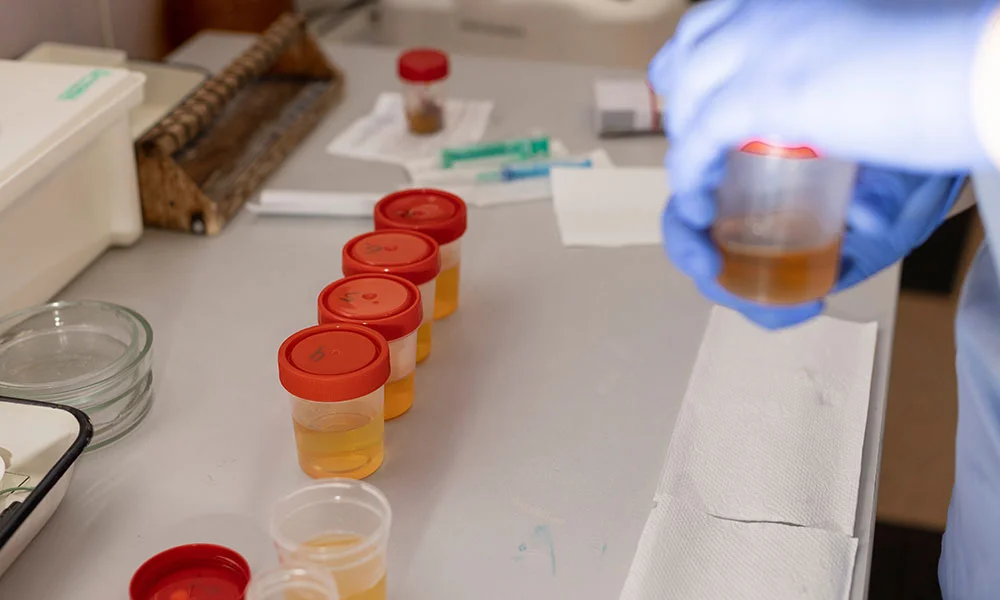
How Long Does Hydrocodone Stay in Urine?
Hydrocodone is metabolized into norhydrocodone, hydromorphone, and dihydrocodeine, and the average detection time is typically approximately 2 to 3 days following last use.[3]
Urine testing is often used due to its practicality, availability, and ability to detect recent drug use over longer periods than blood or saliva in many situations. However, not all urine drug screens are created equal. Basic opiate screens will provide better results for morphine and codeine, while specific panels or confirmatory testing must be done to identify hydrocodone.
How Long Does Hydrocodone Stay in Blood?
Blood testing generally has a shorter detection window than urine testing since hydrocodone’s half-life is measured in hours. Blood tests are generally used to evaluate very recent use, intoxication, or medical emergencies rather than exposure several days prior.
A blood test would normally be conducted during an emergency situation, legal proceedings, forensic evaluation, or medical assessment when impairment due to current or past drug use is a concern. Depending upon dosage timing, test sensitivity, and rate of metabolism determined by the individual, the exact timeframe varies widely.
How Long Does Hydrocodone Stay in Saliva?
Saliva testing (also known as oral fluid testing) provides more recent indicators of drug use compared to urine or blood testing.
Depending on the type of test administered and usage patterns, hydrocodone should be detectable in saliva for approximately 1 to 2 days.[4] This form of testing is less invasive than blood sampling and more difficult to tamper with than urine testing, which is why some workplaces, legal programs, and medical settings may opt to perform saliva tests.
How Long Does Hydrocodone Stay in Hair?
Hair testing has the most extensive general detection window. A standard hair test will usually show evidence of drug exposure for approximately 90 days based on length of hair collected and laboratory methods used [5].
Hair tests are not usually best suited for confirming recent use of hydrocodone. They are much better at identifying a longer-term history of exposure to hydrocodone. Results can be affected by length of hair, growth rate, cosmetic treatments, hair collection method, and laboratory cutoff levels.
How Can I Make Sure a Hydrocodone Test Is Accurate?
There are steps you can take to improve testing accuracy using appropriate procedures and qualified labs.
Some helpful things to do include:
- Provide your healthcare provider or treatment professional with information about all prescription medications currently being used.
- Provide prescription information for relevant tests
- Find out whether the test includes hydrocodone specifically.
- Use confirmatory testing whenever results will have medical, legal, or job consequences.
- Follow instructions provided with the collection carefully
- Do not attempt to dilute, alter, or tamper with samples.
- Implement chain of custody procedures for legal or workplace collections.
- Consult with a healthcare professional before making assumptions about unexpected results.
Hydrocodone metabolism can be complex because trace amounts of hydrocodone can occasionally appear in context with other opioids, which makes interpretation best left to medical professionals or qualified toxicologists.
When Does Hydrocodone Use Become an Issue?
While not everyone who takes hydrocodone develops an opioid dependency or addiction disorder, those who use it regularly increase the risk.
Signs that may indicate hydrocodone addiction treatment is warranted include:
- Taking it in higher doses or more frequently than prescribed
- Using another person’s hydrocodone prescription.
- Being unable to stop taking it despite wanting to
- Experiencing withdrawal symptoms like sweating, anxiety, cramps, nausea, diarrhea, pain, muscle spasms, and sleeplessness when attempting to stop
- Taking hydrocodone solely for relaxation, sleep, or emotional coping
- Combining hydrocodone with alcohol or other substances.
- Continuing hydrocodone usage despite negative consequences to health, work, or relationships
- You find yourself preoccupied with it between doses
- Your loved ones have expressed concerns about your hydrocodone use or behavior while under its influence
Overcome Hydrocodone Addiction at Paramount Wellness
If hydrocodone use has become too difficult to manage, or if drug testing concerns are part of a larger issue of opioid use, you do not have to face it alone.
Paramount Wellness provides caring treatment for opioid addiction and co-occurring mental health disorders in a calming setting. Our treatment plans may involve medical detoxification, inpatient or outpatient counseling, support therapy, preventing future relapses, and planning post-treatment follow-up support based on your requirements.
If you are concerned about either your own or others’ hydrocodone use, opioid withdrawal, or a family member who may benefit from our assistance, contact us today. We can assist you in learning about possible treatment options and begin a safe path towards recovery.
Frequently Asked Questions About How Long Hydrocodone Stays in Your System
Related Programs & Therapies
- Medically Supervised Detox
- Medically Assisted Treatment
- Inpatient
- Aftercare
- Substance Use Disorder
- Individual Therapy
- CBT
- Twelve-Step Facilitation
- DBT
- Group Therapy
- Holistic Treatment Modalities
- Trauma-Informed Group Treatment
- ACT
- Family Programming
- Experiential Therapy
- Anger Management
- Smoking Cessation
- Medical Education
- Biofeedback
Learn More About Dual Diagnosis Treatment at Paramount Wellness
We’re Glad You’re Here! Take The First Step In Recovery Today.
We’re eager to meet you and help you succeed in your recovery journey. Contact us today to start now.
